
What if we told you that a 66-year-old woman gave up everything to have a child? Maria del Carmen Bousada defied the laws of nature and societal expectations to fulfill her desire for motherhood. A bold choice, fraught with fleeting happiness and controversy, that raises questions about the limits of modern medicine.
In 2006, a Spanish retiree named Maria stunned her family and friends by announcing she was expecting twins. Far from being a coincidence, this pregnancy was the culmination of a long and arduous journey. Driven by an unwavering desire to start a family, she sold her house to finance in vitro fertilization (IVF) in the United States. To gain admission to the fertility clinic, she reportedly concealed her true age, presenting herself as 55 instead of 66. “Circumstances forced me to act this way. It was my only chance to make my dream a reality,” she told the media at the time. Her story quickly captivated the world, provoking contrasting reactions: some saw it as proof of courage and independence, while others, including her own family, denounced it as a selfish and unreasonable act.
A fragile happiness, quickly shattered
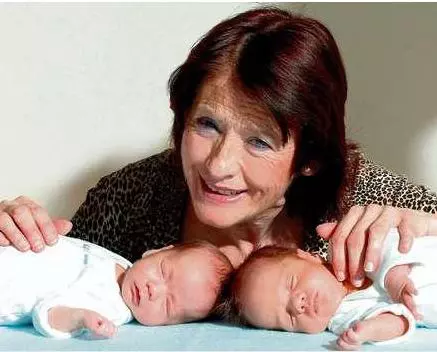
Despite harsh criticism, Maria gave birth in December 2006 to two perfectly healthy boys, named Christian and Pau. At that moment, she held the world record for the oldest mother. But this joy was short-lived. Just six months after the birth, she was diagnosed with ovarian cancer. “They’re still babies, I haven’t told them anything. They’re too young to understand,” she explained at the time, her heart heavy. Her health deteriorated rapidly, and in 2009, at the age of 69, Maria succumbed to the disease, leaving her two young sons orphaned.

The twins’ fate after his departure
Following her death, Maria’s relatives took in the twins. Her brother, Ricardo, gave a poignant testimony: “I think she acted too late… But now they are here, we cherish them and give them all our love.” Today, Christian and Pau, who grew up in Cádiz, seem to be thriving in a loving and stable environment. A family member confided: “They are well cared for and are doing wonderfully.”

Late motherhood: a dilemma between progress and morality
Maria’s case reignites a burning question: at what age is it reasonable to have children? Advances in science now allow menopausal women to carry a child through IVF with egg donation. This progress, however, raises legitimate concerns: isn’t there a risk that the child will lose their parents prematurely? Can an older mother provide the necessary energy for raising a child? Should clinics set a strict age limit? Maria, for her part, never regretted her choice. “Every individual should be free to decide when they become a parent, without encountering social barriers,” she asserted with conviction.

A thought-provoking life lesson
Maria del Carmen Bousada’s story oscillates between inspiration and controversy. While her maternal love commands respect, her premature departure highlights the dangers associated with late pregnancies. Ultimately, this story prompts us to reflect on the boundaries of science and the limits of individual freedom. In your opinion, should there be a minimum age for becoming a parent?
What if we told you that a 66-year-old woman gave up everything to have a child? Maria del Carmen Bousada defied the laws of nature and societal expectations to fulfill her desire for motherhood. A bold choice, fraught with fleeting happiness and controversy, that raises questions about the limits of modern medicine.
In 2006, a Spanish retiree named Maria stunned her family and friends by announcing she was expecting twins. Far from being a coincidence, this pregnancy was the culmination of a long and arduous journey. Driven by an unwavering desire to start a family, she sold her house to finance in vitro fertilization (IVF) in the United States. To gain admission to the fertility clinic, she reportedly concealed her true age, presenting herself as 55 instead of 66. “Circumstances forced me to act this way. It was my only chance to make my dream a reality,” she told the media at the time. Her story quickly captivated the world, provoking contrasting reactions: some saw it as proof of courage and independence, while others, including her own family, denounced it as a selfish and unreasonable act.
A fragile happiness, quickly shattered
Despite harsh criticism, Maria gave birth in December 2006 to two perfectly healthy boys, named Christian and Pau. At that moment, she held the world record for the oldest mother. But this joy was short-lived. Just six months after the birth, she was diagnosed with ovarian cancer. “They’re still babies, I haven’t told them anything. They’re too young to understand,” she explained at the time, her heart heavy. Her health deteriorated rapidly, and in 2009, at the age of 69, Maria succumbed to the disease, leaving her two young sons orphaned.
The twins’ fate after his departure
Following her death, Maria’s relatives took in the twins. Her brother, Ricardo, gave a poignant testimony: “I think she acted too late… But now they are here, we cherish them and give them all our love.” Today, Christian and Pau, who grew up in Cádiz, seem to be thriving in a loving and stable environment. A family member confided: “They are well cared for and are doing wonderfully.”
Late motherhood: a dilemma between progress and morality
Maria’s case reignites a burning question: at what age is it reasonable to have children? Advances in science now allow menopausal women to carry a child through IVF with egg donation. This progress, however, raises legitimate concerns: isn’t there a risk that the child will lose their parents prematurely? Can an older mother provide the necessary energy for raising a child? Should clinics set a strict age limit? Maria, for her part, never regretted her choice. “Every individual should be free to decide when they become a parent, without encountering social barriers,” she asserted with conviction.
A thought-provoking life lesson
Maria del Carmen Bousada’s story oscillates between inspiration and controversy. While her maternal love commands respect, her premature departure highlights the dangers associated with late pregnancies. Ultimately, this story prompts us to reflect on the boundaries of science and the limits of individual freedom. In your opinion, should there be a minimum age for becoming a parent?


0 comments:
Post a Comment